Trimming That Keeps Trees and Homes Safe
Not every problem tree needs to come down. Often, a good trim is enough to remove the risk and keep the shade. Regular pruning takes off dead and weak limbs before a thunderstorm or ice storm does it for you, usually right onto your roof or car.
We connect Greenville homeowners with independent local tree pros who trim and prune oaks, maples, sweetgums, pines and ornamental trees. A skilled climber knows which cuts help the tree and which cuts can hurt it.
Common Trimming Jobs
- Cutting back limbs that overhang the roof, gutters or chimney
- Raising the canopy over driveways, sidewalks and lawns
- Removing dead, broken or hanging branches
- Thinning dense crowns so wind can pass through
- Clearing branches away from the house's service drop and other lines on your side of the meter, where allowed
- Shaping young trees so they grow strong and balanced
- Pruning sweetgums to reduce limbs that drop gumballs over patios and walkways
Good Pruning vs. Bad Pruning
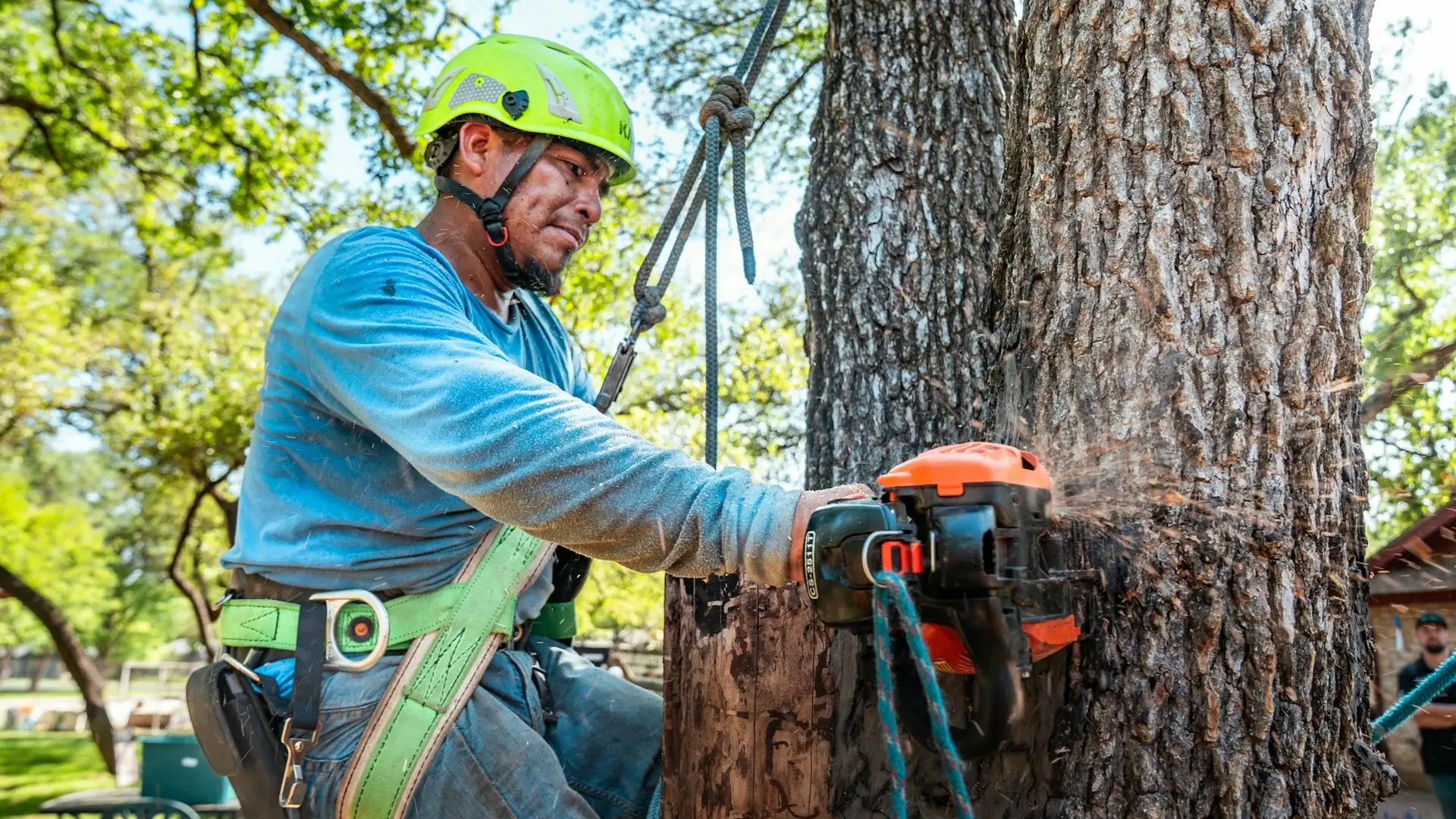
Topping, which means cutting the top of a tree off flat, is a common mistake. It leaves large wounds, invites decay and causes weak, fast-growing sprouts that break easily. A good contractor will avoid topping and make clean cuts near the branch collar instead.
Timing matters too. Many trees can be pruned any time dead or dangerous limbs need to come off, but routine pruning of some species is often done in the dormant season. Ask your contractor what makes sense for your trees.
Removing too much of a tree's live canopy at once can stress it. Most pros aim to take only what is needed to meet your goal.
Trees Near Power Lines
Branches growing into the main utility lines along the street or through your yard are a job for the electric utility and its line-clearance contractors, not a homeowner or a general tree crew. If you see limbs touching or close to those lines, contact your utility. Never climb a tree or use a pole saw near an energized line. Ask any contractor you hire to confirm their insurance and what kinds of line-adjacent work they are qualified to do.